
Stand Behind Skid Steer Controls and Operator Visibility
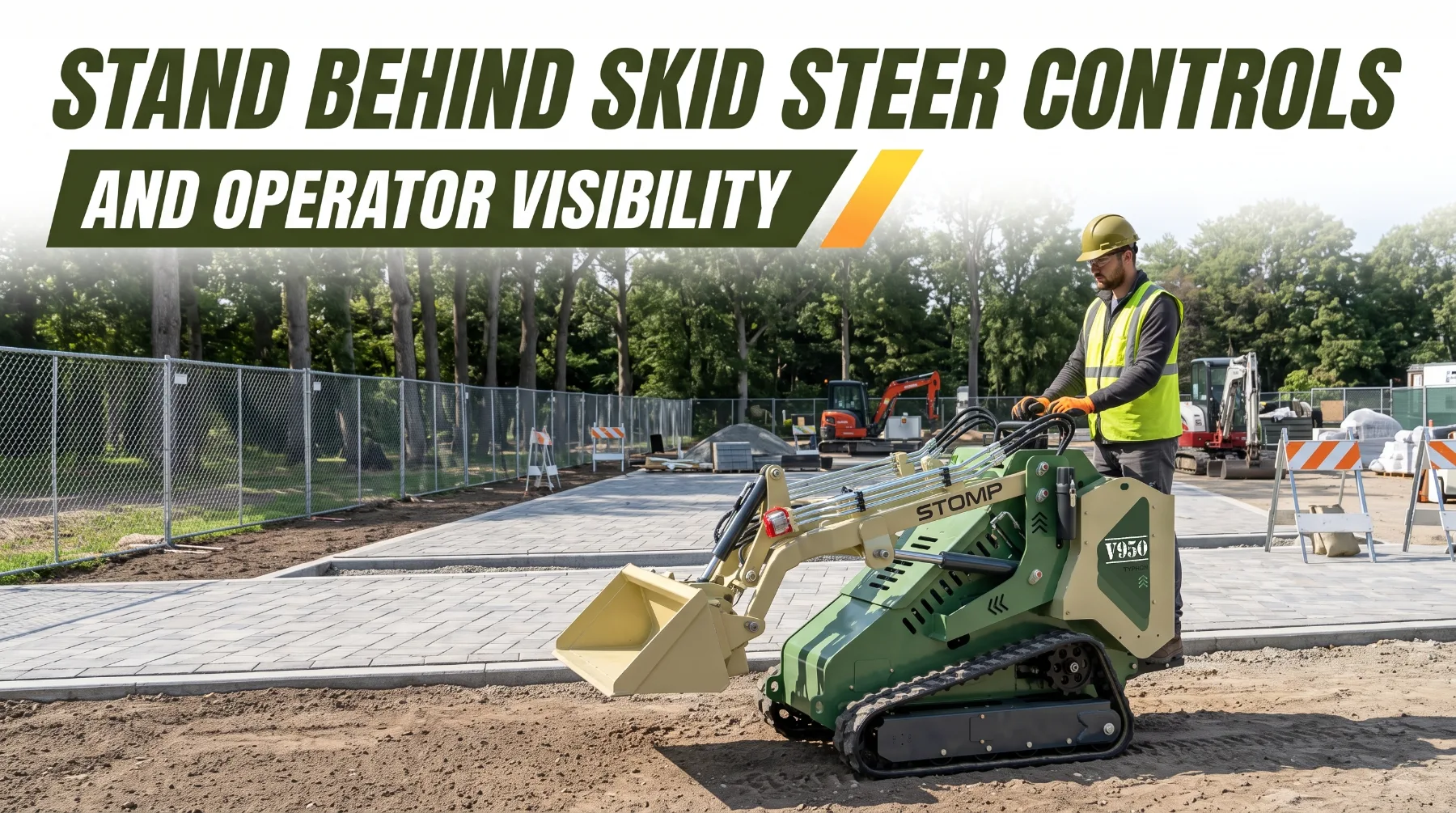
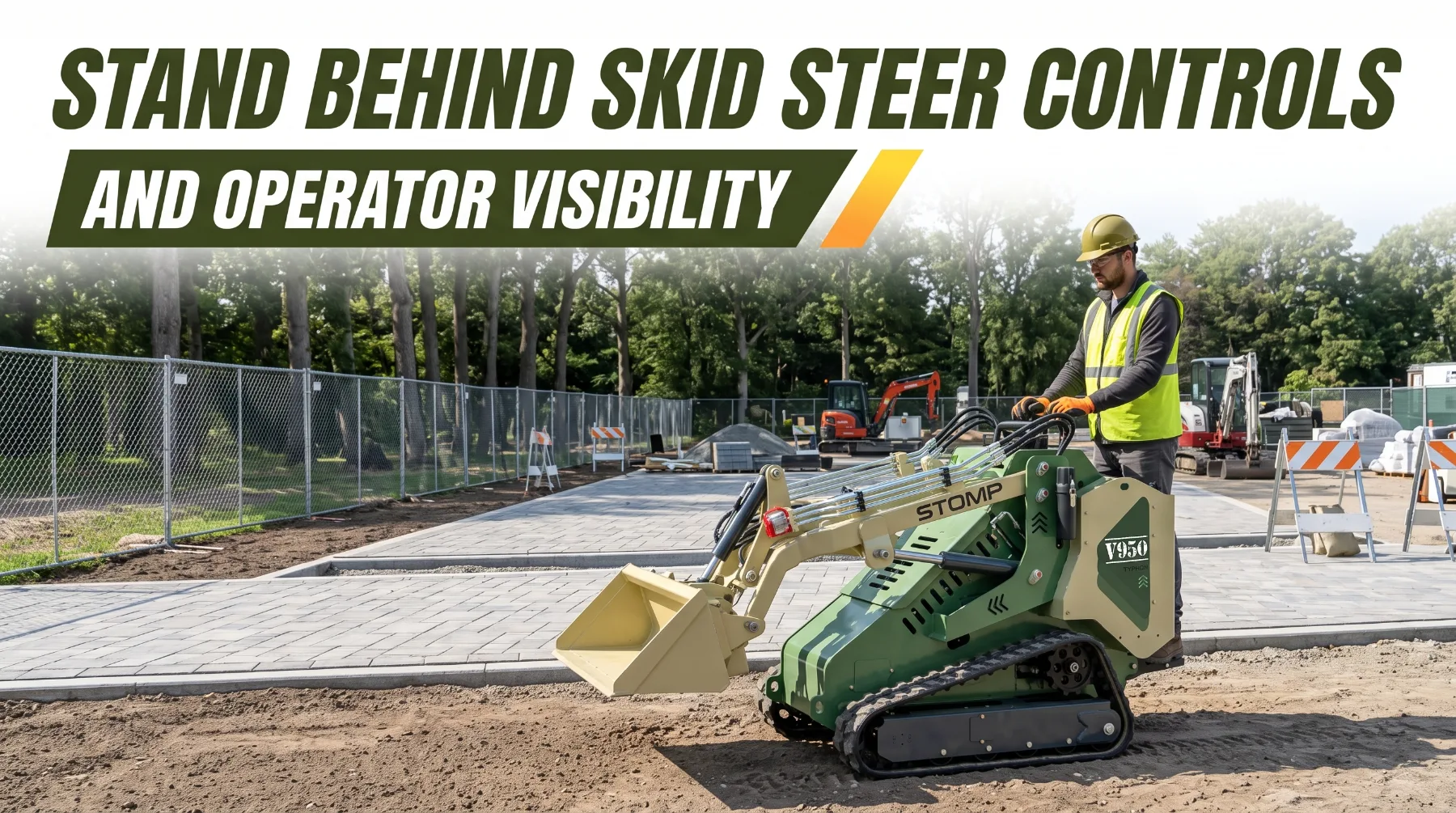
Working along a narrow residential property can leave a landscaping operator with very little room for repositioning. Trees, fences, finished surfaces, and other obstacles may sit close to the work area, making every steering correction, lift, and reverse movement important. Clear visibility of the attachment also helps the operator judge position and movement throughout each task. In these tight conditions, the control layout and operator position become important parts of how easily the machine can be handled.
Operator controls need to remain easy to reach and responsive during repeated movements. A practical control arrangement allows the operator to steer, lift, lower, and adjust the attachment without unnecessary hand or body movement. The position of the operator also affects visibility, particularly when working close to landscaping features or finished surfaces where small positioning errors can cause damage.
Around confined residential areas, good visibility and predictable controls help make each movement more deliberate. Keeping the attachment within view, making gradual steering corrections, and maintaining awareness of surrounding obstacles can improve control during repetitive work. A well-arranged operating station supports accurate material placement and maneuvering when available space is limited.
Keeping the Attachment in View
A stand-behind configuration places the operator at the rear of the machine with a direct line of sight toward the attachment and the immediate work area. That vantage point is a real advantage in detailed work, because you can see exactly what the attachment is doing as you do it, rather than judging it from a distance or a fixed seat.
Clear visibility pays off across the tasks landscaping work throws at you. Whether you’re grading soil to a smooth finish, moving mulch into a bed, positioning a bucket for a precise dump, or working right up against existing landscaping, seeing the attachment clearly helps you place it accurately and avoid contact with the features you’re trying to protect.
Key takeaway: The stand-behind position gives the operator a direct view of the attachment and immediate work area, which supports accurate grading, mulch handling, bucket positioning, and work close to landscaping.
Using Intuitive Control Layouts
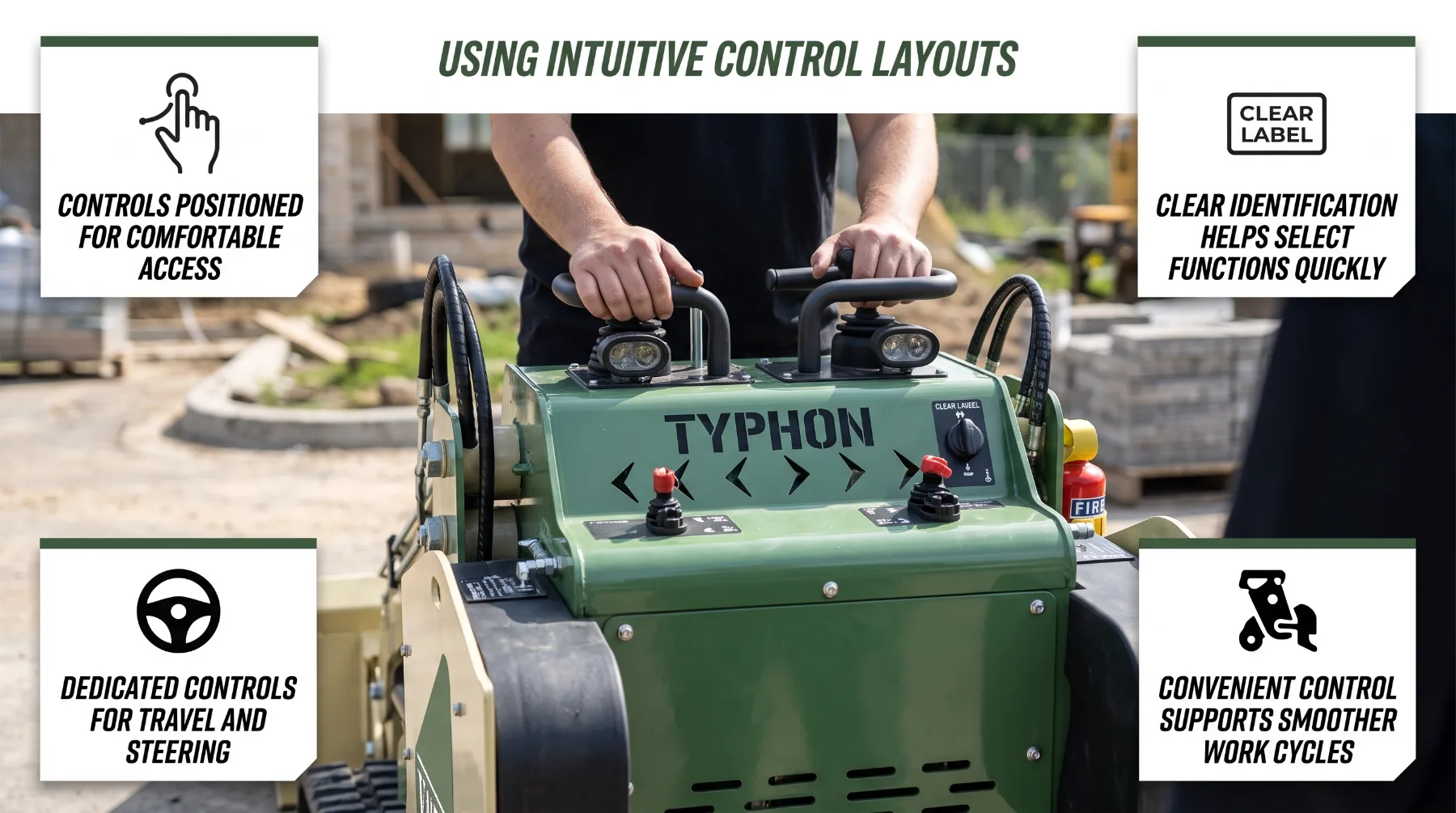
A well-designed control layout helps operators focus on the work area and machine movement instead of searching for controls. Controls that are easy to identify and operate can make machine functions feel more natural and reduce unnecessary movement during operation.
Skid steer controls typically manage travel, steering, loader functions, and auxiliary attachments. Understanding their positions and functions helps operators move smoothly between tasks, especially when frequent adjustments are needed in confined work areas.
- Easy Control Access: Controls should be positioned where operators can reach and use them comfortably.
- Clear Identification: Easy-to-recognize controls help operators select the correct function quickly.
- Travel & Steering: Dedicated controls allow smooth adjustment of machine movement and direction.
- Attachment Operation: Convenient control of loader and auxiliary functions supports smoother work cycles.
Key takeaway: Controls should be easy to identify and operate with minimal movement, covering travel, steering, loader functions, and auxiliary attachments depending on the machine.
Monitoring Surrounding Obstacles
Confined landscaping sites are crowded with things you can’t afford to hit. Trees, fences, walls, parked vehicles, and workers can all create hazards around a compact skid steer, and any of them can appear in a blind spot as the machine turns or repositions. Staying aware of the full picture is a constant part of the job.
The right habit is to continuously check the area around the machine, not just the direction you’re heading. When direct sightlines are limited by structures, plantings, or the attachment itself, use a spotter or other visibility aids to cover what you can’t see. A spotter’s guidance is especially valuable when working close to people or fixed features, where a small misjudgment carries a real cost.
Key takeaway: Trees, fences, walls, vehicles, and workers create hazards around a compact skid steer, so continuously check the surroundings and use spotters or visibility aids when sightlines are limited.
Managing Attachment Movement
Beyond the work itself, an attachment can also change what you are able to see while operating the machine. Bucket height and attachment position shift your view throughout a work cycle, and a raised or awkwardly placed attachment can block your line of sight to the ground and the area ahead.
Maintaining a practical attachment position during travel helps keep the ground and surroundings easier to see. Lowering the bucket to a sensible carry height, rather than moving with it raised, provides better visibility and steadier machine balance. Higher positions should be reserved for tasks that require them, with the attachment returned to a low, controlled position when traveling between work points.
Clear visibility also depends on paying attention to how the attachment moves during each part of the work cycle. Watching the area around the bucket or tool before raising, lowering, or repositioning it can help identify people, obstacles, and changes in ground conditions. Keeping the attachment in a predictable position makes it easier to monitor the work area and maintain awareness while moving between tasks.
Key takeaway: Bucket height and attachment position affect the operator’s view, so keeping the attachment at a practical position during travel maintains a clearer view of the ground and surrounding area.
Reversing in Confined Spaces
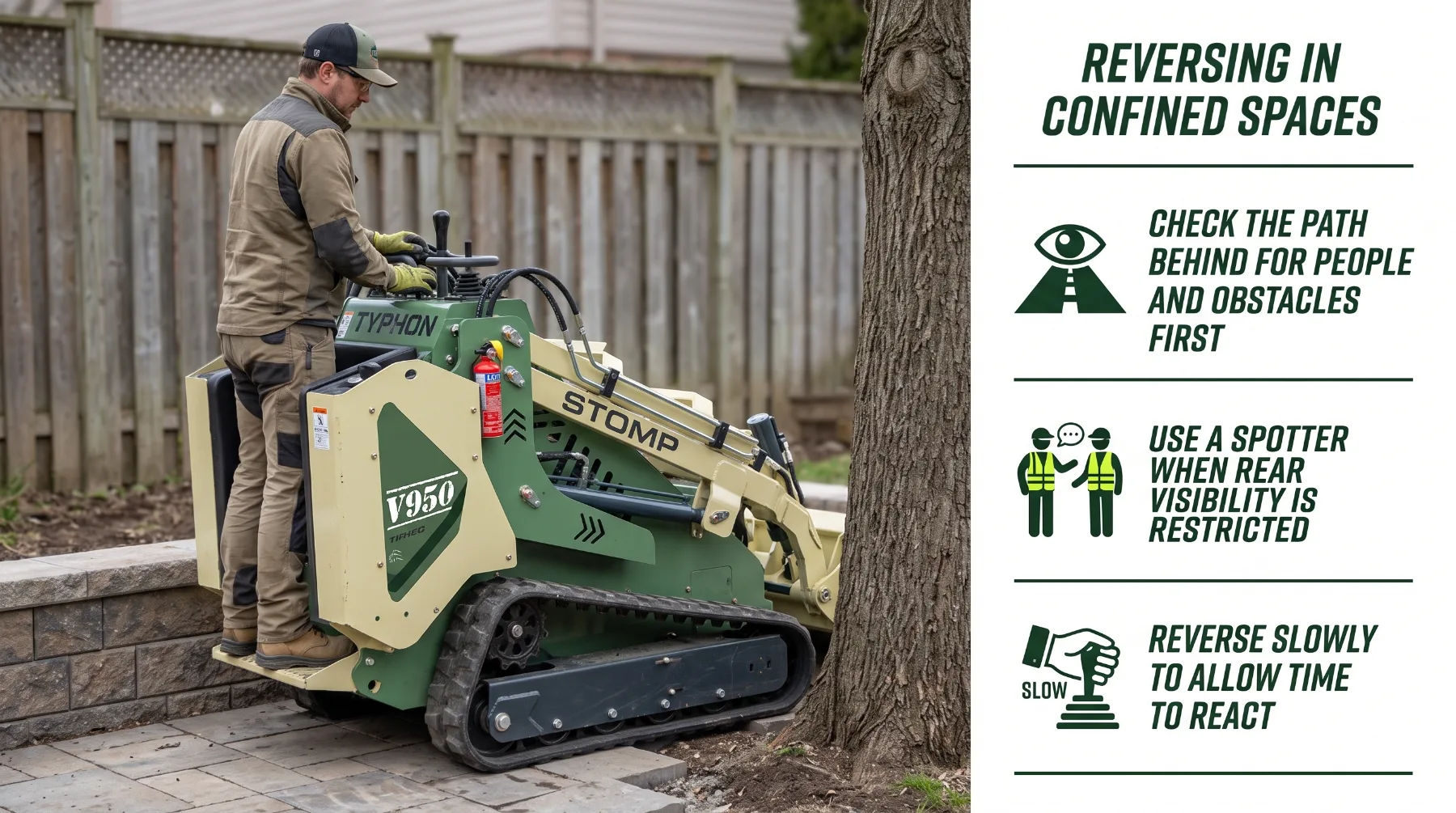
Reversing is where limited rear visibility becomes a genuine concern, and narrow landscaping areas force plenty of it. Backing into or out of tight spots between trees, fences, and finished surfaces demands extra care, because the space behind you often holds the very hazards you’re trying to work around.
Before moving backward, check the intended travel path for people, obstacles, equipment, and ground hazards. Confirm the route is clear, and stay aware of anything that could enter it as you reverse. Where the view behind is genuinely restricted, a spotter is worth the pause. Slowing down and reversing deliberately gives you time to react, which matters far more than saving a few seconds on a crowded site.
Key takeaway: Limited rear visibility makes reversing risky in confined areas, so check the travel path for people, structures, equipment, and ground hazards before moving backward.
Maintaining Visibility Components
Good visibility depends on more than where you look during operation. Mirrors, lights, warning devices, control labels, and other visibility-related components only provide their intended support when they are kept in working order. Regular inspection of these items should be part of routine machine care.
Even minor defects can gradually reduce how well you monitor the work area. Dirt on a mirror, a dim or failed light, a damaged warning device, or a loose component may affect visibility without being immediately noticeable. Checking these items before each shift helps identify problems before they become a concern during active work.
Simple maintenance steps can keep these visibility aids ready for demanding conditions. Wiping mirrors clean, confirming that lights and warning devices function properly, and keeping labels legible all support clearer awareness around the machine. Regular checks become especially important when working in tight or busy areas where changes in the surroundings can happen quickly.
Key takeaway: Mirrors, lights, warning devices, and control labels should be inspected regularly, since dirt, damage, or loose components reduce the operator’s ability to monitor the work area.
Conclusion
A stand-behind skid steer combines a compact machine layout with an operator position that can provide direct visibility of the attachment and nearby work area, making it practical for confined landscaping and construction tasks. Clear access to travel, steering, loader, and auxiliary controls supports consistent operation, while keeping the attachment low during travel can improve forward visibility and help maintain a lower center of gravity. Operators should continuously monitor the surrounding area for trees, fences, walls, vehicles, workers, and other obstacles, particularly when maneuvering or reversing. Where the operator’s view is restricted, a trained spotter and agreed communication signals can help manage the movement area. Mirrors, lights, warning devices, labels, and other visibility-related components should also be inspected regularly and kept clean and functional. Confirming control functions, checking the travel path before reversing, maintaining appropriate attachment positioning, and inspecting visibility components before operation helps support controlled and precise work in restricted spaces.
Frequently Asked Questions
Does a stand-behind skid steer provide good visibility?
Yes. The open operator position can provide a direct view of the attachment and nearby work area, which is useful for grading, lifting, and positioning material around finished landscaping. Visibility still depends on attachment position, machine design, and obstacles such as trees, fences, and structures. Keeping the attachment positioned appropriately and using a spotter when sightlines are limited helps maintain awareness in confined spaces.
What controls are commonly found on a stand-behind skid steer?
Controls typically manage travel, steering, loader functions, and auxiliary hydraulics. Travel and steering controls move the machine, loader controls raise, lower, or tilt the attachment, and auxiliary controls operate hydraulic-powered tools. The exact layout varies by machine, so operators should confirm each control’s location and function before starting, especially when working in confined areas.
How does attachment position affect visibility?
Attachment position directly affects the operator’s view. A raised bucket or improperly positioned tool can block the forward view of the ground, obstacles, and people. Keeping the attachment low during travel generally improves visibility and supports better balance and stability. Raise it only when the task requires it, and adjust its position throughout the work cycle to maintain clear sightlines.
What should operators check before reversing?
Check the travel path for people, obstacles, equipment, and ground hazards before reversing. Rear visibility may be limited, especially around trees, fences, structures, and finished surfaces. Reverse slowly and deliberately, and use a spotter with agreed signals when the view is restricted. Staying alert throughout the maneuver helps reduce the risk of contacting people or objects.